
The Science Behind Speech Therapy Cues and Prompts
If you’ve ever watched a speech-language pathologist (SLP) in action, you might notice they use subtle hints, gestures, or even physical guidance. These techniques aren't random; they are highly specific tools called prompts and cues, carefully chosen to help someone communicate more effectively.
The American Speech-Language-Hearing Association (ASHA), the national professional organization for SLPs, doesn't lock therapists into one single strategy. Instead, ASHA emphasizes evidence-based practice (EBP)—using the best scientific research, a therapist's expert judgment, and a client's specific needs to decide which cues work best.
Here is a breakdown of the common types of cues and prompting hierarchies that ASHA-certified SLPs rely on daily.
The Big 3: ASHA-Recognized Categories of Cues
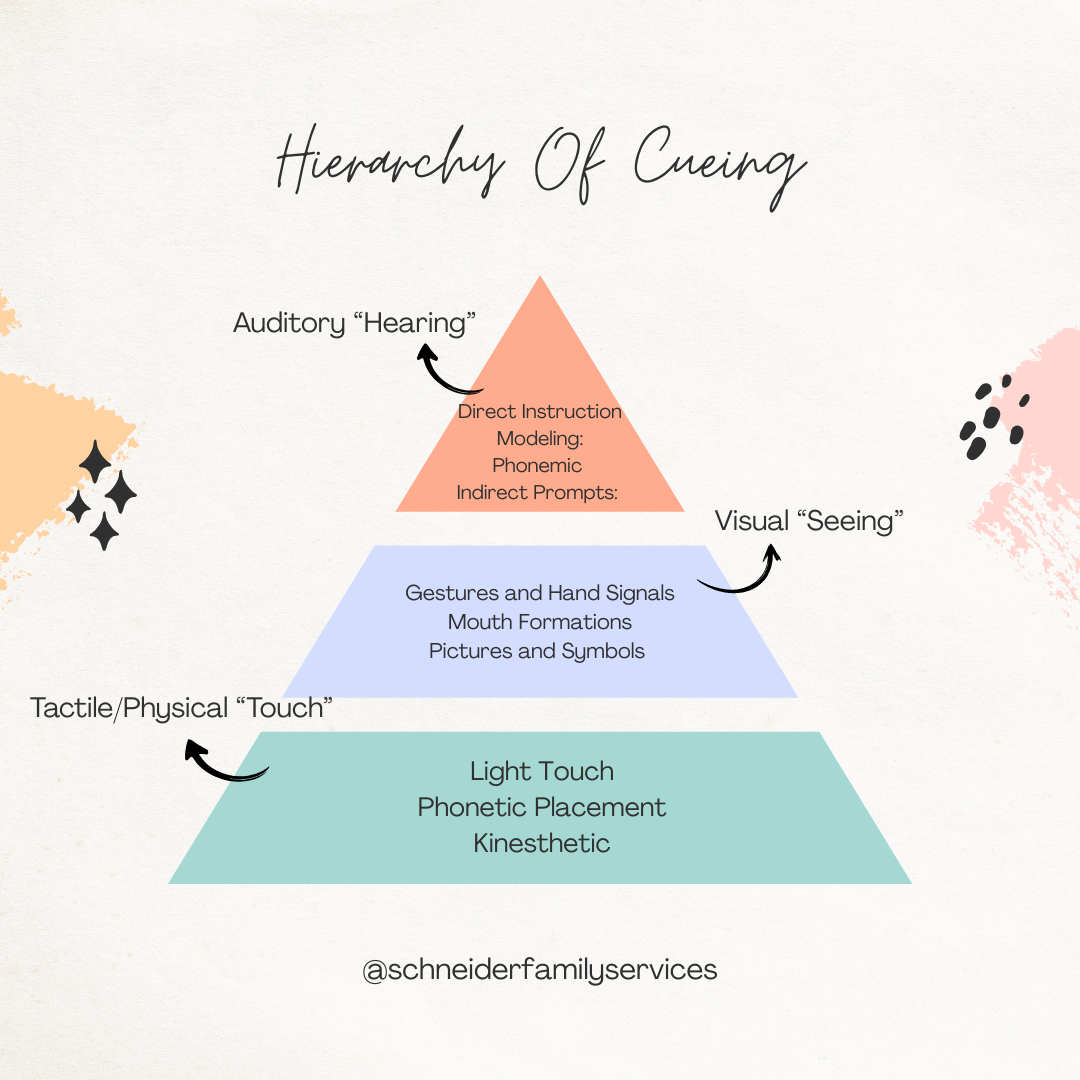
SLPs engage a person's senses to build new communication pathways. ASHA recognizes that effective cueing often involves engaging multiple senses simultaneously (multimodal cueing).
1. Auditory (Hearing) Cues
These cues rely on sound and spoken language.
Direct Instruction: The simplest form: "Say 'up'."
Modeling: The SLP says the target word correctly first, giving the client a clear example to imitate.
Phonemic Cues: Giving the first sound of a word to jog a memory (e.g., "/s-s-s/" for "sun").
Indirect Prompts: Asking open-ended questions that require thought (e.g., "Where does the sun go at night?").
2. Visual (Seeing) Cues
For many people, seeing a cue helps their brain connect the dots better than just hearing it.
Gestures and Hand Signals: Pointing to an object or using a specific hand signal for a sound (e.g., a "flying" motion for the word "plane").
Mouth Formations: Exaggerating how the mouth, lips, and tongue move to produce a difficult sound.
Pictures and Symbols: Using flashcards, communication boards, or written text to aid comprehension and expression, which is vital in Augmentative and Alternative Communication (AAC).
3. Tactile/Physical (Feeling) Cues
These cues provide physical feedback to help the client understand what the "correct" placement feels like.
Light Touch: A gentle tap on the arm for syllable counting or a tap on the throat for voicing.
Phonetic Placement: Gently using a finger or a smooth tool to help position the tongue or lips correctly for a sound.
Kinesthetic Cues: Asking the client to use a full-body movement (like tracing a circle in the air for the "o" sound) to link movement and sound production.
The ASHA-Approved Strategy: The Prompt Hierarchy
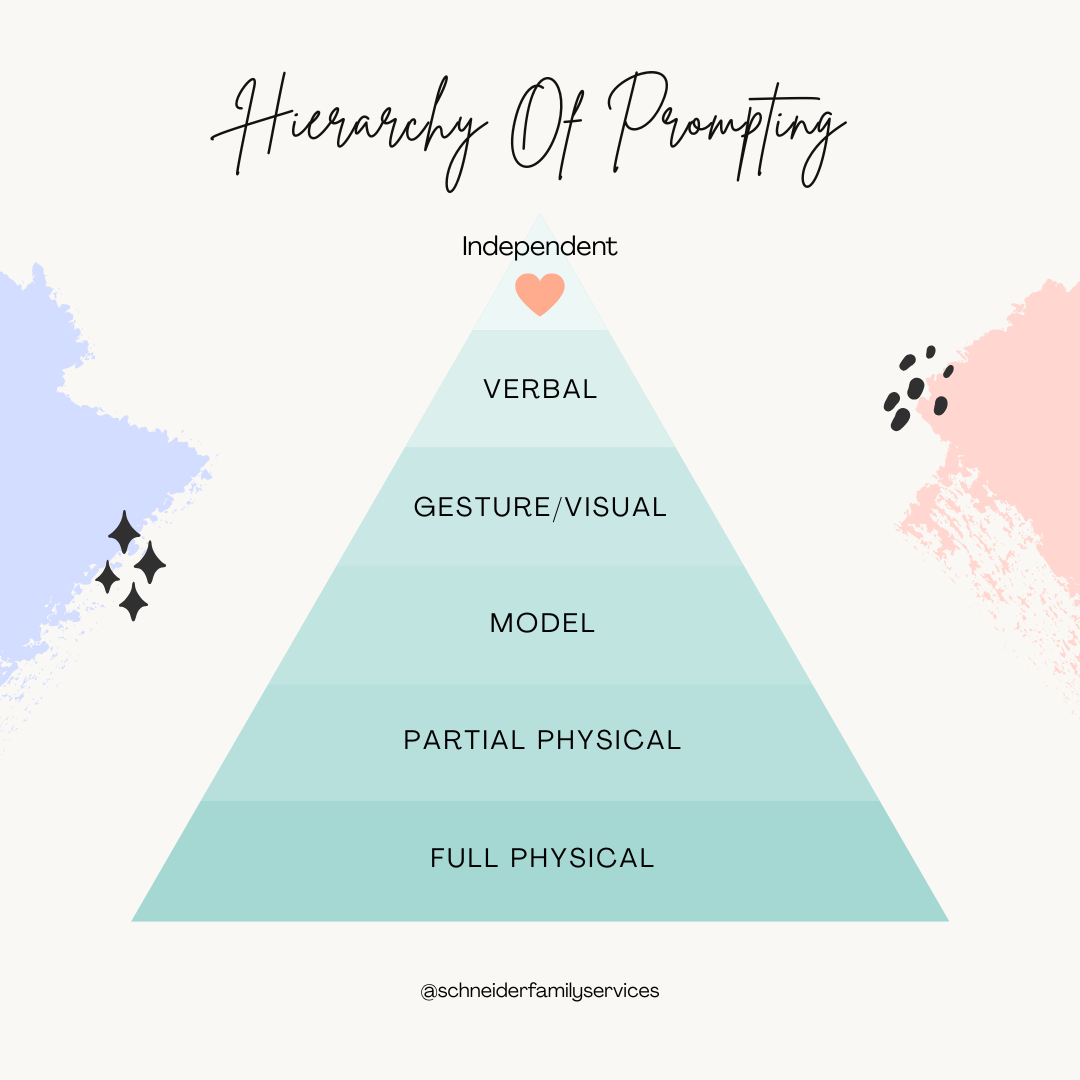
It's not enough to just use a cue; SLPs use them strategically within a prompting hierarchy. This system is all about finding the "just right" amount of help—enough to be successful, but not so much that the client stops trying on their own.
SLPs move through these levels, which typically flow from the most assistance to the least assistance:
Full Physical: The therapist provides hand-over-hand help.
Partial Physical: Minimal physical guidance (e.g., a tap on the elbow).
Model: Showing exactly how to do it.
Gesture/Visual: A simple point or a picture prompt.
Verbal: A simple auditory instruction.
Independent: The client uses the skill correctly on their own.
The Bottom Line
ASHA encourages a flexible approach: the best hint is always the one that helps a specific person the most. Therapists use different prompts in an organized way, slowly stopping the hints as skills improve. This makes sure the final goal is met: real, independent communication.