

Dyslexia Definition: Old vs. New
Side-by-Side Comparison
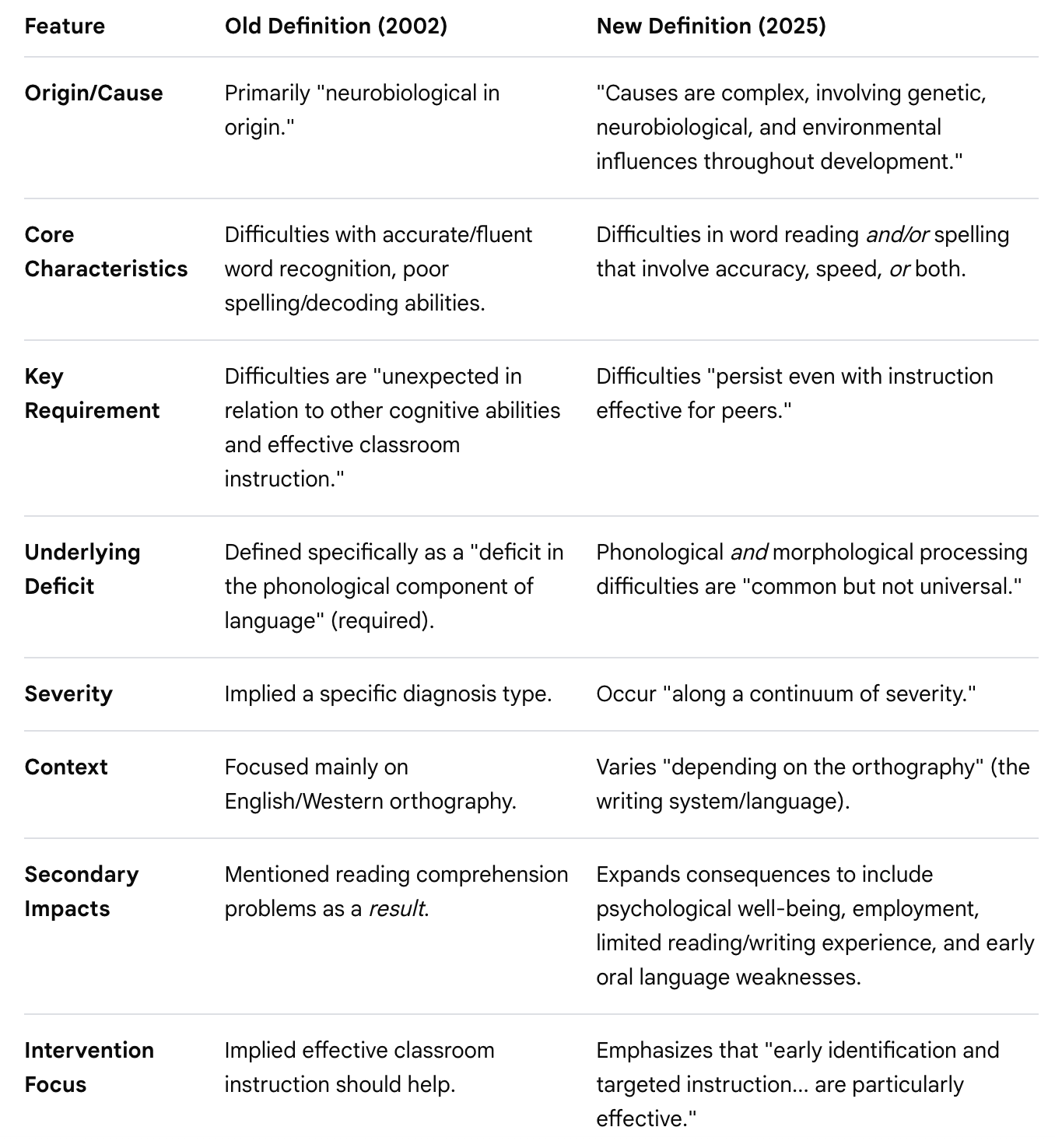
Why the Updated Definition Matters
1. Embraces the Full Language Picture
The old version put emphasis on phonological processing—sound-based reading.
The new definition adds morphological (word parts) and orthographic (written patterns) processing, plus broader oral language skills. That means more kids who don’t “sound like typical dyslexia” can now be recognized early.
2. Recognizes a Spectrum, Not a Label
Instead of a yes/no label, dyslexia is now seen as existing along a continuum—from mild challenges to more severe.
This shift helps us understand that every child’s journey is unique and person-centered support matters.
3. Focuses on What Persists—not What’s Unexpected
The old definition flagged struggles as “unexpected” compared with IQ. That sometimes meant children with lower scores were overlooked.
The new definition focuses on difficulties that persist even with instruction that helps peers—removing an unfair barrier.
4. Highlights Long-Term & Emotional Well-Being
Previously, secondary outcomes mentioned reading comprehension and background knowledge.
Now, the definition also recognizes impacts on self-esteem, confidence, and even future job opportunities—giving emotional support the attention it needs alongside academics.
5. Encourages Early Screening & Support
For the first time, the definition puts emphasis on timely identification and instruction, especially in early grades—because starting early boosts success.
What This Means for Your Family
Kids with different language strengths and weaknesses are more likely to be spotted early—whether their difficulties are in sound, word structure, or reading speed.
Preschools and kindergartens may begin checking language and literacy sooner, giving children a boost before challenges increase.
Support plans will now address each child’s unique language profile—not just drilling phonics, but also focuses on word parts, spelling patterns, and building confidence.
Kids who struggle at reading can feel anxious or discouraged. With emotional well‑being included in the definition, teachers and schools are more likely to support children both academically and emotionally.
How You Can Use This New Definition
Ask the right questions: “Has my child been screened for phonological and language comprehension skills?”
Request a literacy plan that considers reading accuracy, speed, and spelling—not just phonics.
Talk with teachers/counselors about how they support kids’ emotional and academic growth.
Advocate with confidence: You now have the latest research-backed language to support early screening, personalized instruction, and emotional support.
The 2025 definition isn’t just a rewording—it’s a leap forward in understanding dyslexia as varied, lifelong, and deserving of early, comprehensive support. With this changed framing, schools and families are better equipped to help every child flourish.